Top 10 AI Trends Shaping Business Automation in 2026

2026 marks a pivotal year in business automation. AI technologies that were experimental just two years ago are now mainstream, delivering measurable business value. Here are the ten trends defining the future of work and business operations.
1. Generative AI for Business Content
Generative AI has moved beyond novelty to become a core business tool. Companies use it for creating marketing content, product descriptions, customer communications, and internal documentation. The quality has reached a point where AI-generated content is indistinguishable from human-created content in many contexts.
Businesses report 70% time savings in content creation while maintaining or improving quality. The key is using AI as a collaborative tool—humans provide strategy and creativity, AI handles execution and iteration.
2. Hyper-Personalization at Scale
AI enables businesses to deliver personalized experiences to thousands of customers simultaneously. From customized product recommendations to individualized email campaigns, AI analyzes behavior patterns and preferences to create unique experiences for each customer.
E-commerce businesses using AI personalization report 30-50% increase in conversion rates and 25% increase in average order value. The technology has become accessible to small businesses, not just enterprise giants.
3. Predictive Analytics for Decision Making
Predictive AI analyzes historical data to forecast future trends, customer behavior, and business outcomes. This enables proactive decision-making rather than reactive responses.
Applications include demand forecasting, customer churn prediction, maintenance scheduling, and financial planning. Businesses using predictive analytics report 40% improvement in decision accuracy and 30% reduction in operational risks.
4. Intelligent Process Automation (IPA)
IPA combines robotic process automation (RPA) with AI to handle complex workflows that require decision-making. Unlike traditional automation, IPA can adapt to variations and exceptions in processes.
Finance departments use IPA for invoice processing, expense management, and reconciliation. HR teams deploy it for candidate screening, onboarding, and benefits administration. The result is 60-80% reduction in processing time and near-zero error rates.
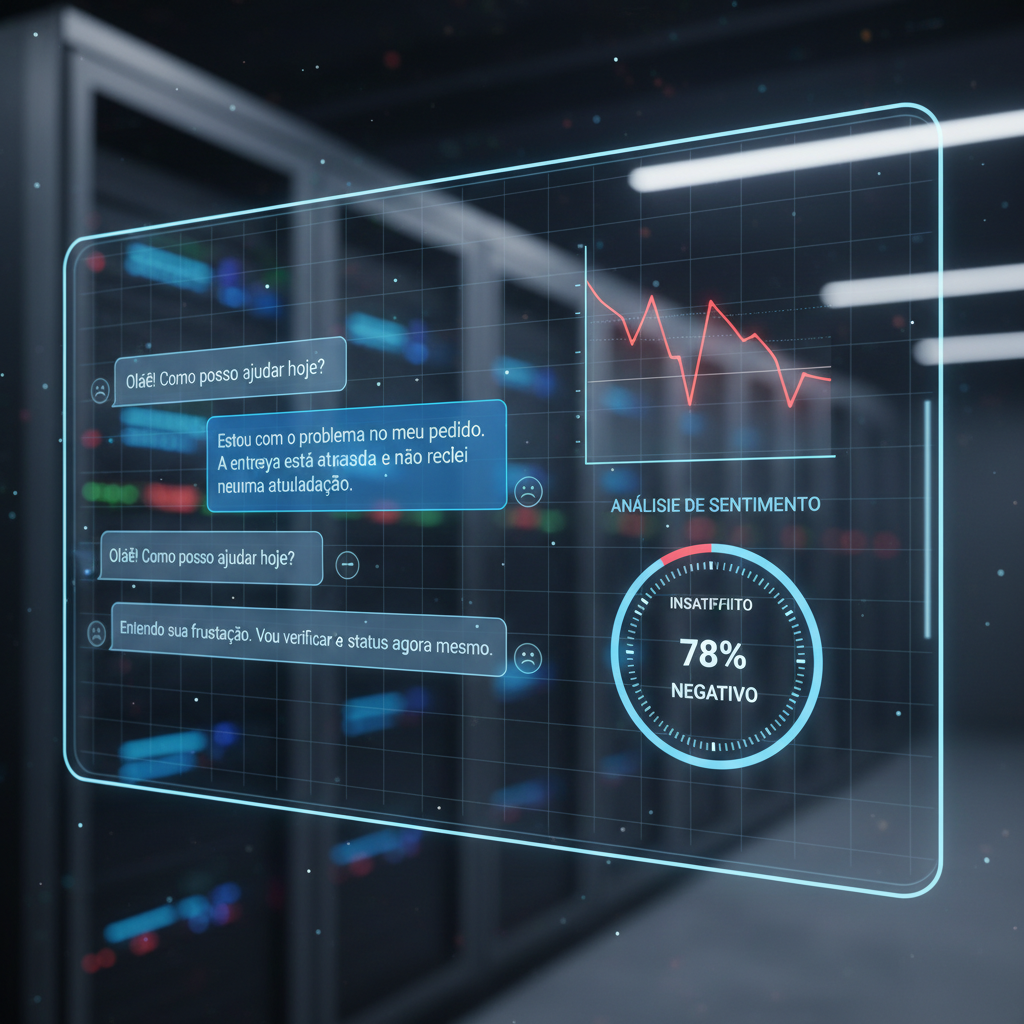
5. Conversational AI and Voice Interfaces
Voice-enabled AI assistants are becoming the primary interface for business applications. Employees use voice commands to access data, create reports, and manage tasks while on the go.
Customer-facing voice AI handles phone inquiries with natural, human-like conversations. The technology has achieved 95%+ accuracy in understanding intent and context, making it viable for complex customer service scenarios.
6. AI-Powered Cybersecurity
AI security systems detect and respond to threats in real-time, analyzing patterns that would be impossible for humans to identify. This is critical as cyber threats become more sophisticated.
Small businesses benefit from enterprise-grade security through AI-powered tools that continuously monitor for anomalies, suspicious activities, and potential breaches. The systems learn and adapt to new threat patterns automatically.
7. Automated Data Analysis and Insights
AI analytics tools automatically identify trends, anomalies, and opportunities in business data. Instead of spending hours creating reports, teams receive automated insights with recommended actions.
Marketing teams use AI to analyze campaign performance and optimize spend allocation. Sales teams get automated insights on lead quality and conversion probability. Operations teams receive alerts about efficiency issues before they impact customers.
8. AI-Enhanced Collaboration Tools
Modern collaboration platforms integrate AI to summarize meetings, track action items, and facilitate decision-making. AI assistants schedule meetings by understanding context and preferences, eliminating the back-and-forth of coordination.
Remote and hybrid teams report 40% improvement in productivity using AI-enhanced collaboration tools. The technology bridges communication gaps and ensures nothing falls through the cracks.
9. Sustainable AI and Green Computing
Businesses are increasingly conscious of AI's environmental impact. The trend is toward efficient AI models that deliver results with minimal computational resources and energy consumption.
AI is also being used to optimize business operations for sustainability—reducing waste, optimizing energy usage, and improving supply chain efficiency. This delivers both environmental and financial benefits.
10. Democratization of AI Development
No-code and low-code AI platforms enable non-technical business users to create custom AI solutions. This democratization means businesses don't need large technical teams to benefit from AI.
Small businesses can now build custom chatbots, automate workflows, and create predictive models using intuitive visual interfaces. The barrier to AI adoption has never been lower.
These ten trends represent the present and near future of business automation. The common thread is accessibility—AI technologies that were once available only to large enterprises are now within reach of small and medium businesses. The competitive advantage goes to those who act quickly to integrate these capabilities into their operations.